

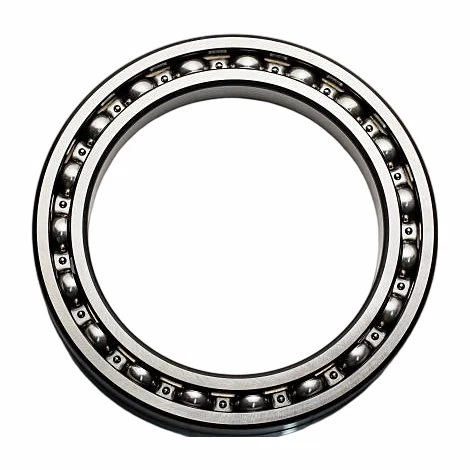
Key Specifications
Titanium ball bearings are used in applications where lightweight, high strength, corrosion resistance, and durability are critical. These bearings combine titanium alloys for the outer races and sometimes the inner races, with titanium balls or hybrid designs that use steel or ceramic balls.
Titanium ball bearings offer a unique set of advantages for industries requiring high performance in challenging conditions. Their lightweight, corrosion resistance, and high strength make them a suitable choice for demanding applications, especially when paired with hybrid materials like ceramic balls for enhanced performance.
1. Material Composition:
- Titanium Alloy Races: The bearing races (outer and sometimes inner) are often made from Ti-6Al-4V (Grade 5) titanium alloy, which consists of 90% titanium, 6% aluminum, and 4% vanadium. This alloy is commonly used due to its high strength-to-weight ratio and excellent corrosion resistance.
- Balls: Titanium balls can be used in titanium bearings, though they are sometimes replaced with steel balls (chrome steel, stainless steel) or ceramic balls (e.g., silicon nitride, ZrO2), which offer higher hardness and lower friction.
- Hybrid Design: Hybrid titanium ball bearings often feature a combination of titanium races and ceramic balls for reduced friction and enhanced performance in high-speed applications.
2. Density:
Titanium alloy has a density of approximately 4.43 g/cm³, which is significantly lighter than steel (7.85 g/cm³), making titanium ball bearings ideal for applications where weight reduction is crucial, such as in aerospace, high-performance automotive, or racing environments.
3. Tensile Strength:
Ti-6Al-4V Titanium Alloy has a tensile strength of 900-1,200 MPa (megapascals), while steel balls typically have a tensile strength of 1,000-1,500 MPa. Titanium ball bearings combine lightweight with good strength, making them suitable for applications with moderate to high load-bearing requirements.
4. Hardness:
The hardness of titanium alloy used in the bearing races is typically 300-400 HV (Vickers hardness), while steel balls can have a hardness ranging from 600-750 HV depending on the grade. Titanium itself is softer than steel but still provides a good balance of wear resistance and toughness, especially when paired with ceramic or hardened steel balls.
5. Corrosion Resistance:
Titanium is highly resistant to corrosion, particularly in aggressive environments like saltwater or acidic conditions. This makes titanium ball bearings ideal for marine, chemical, and aerospace applications where other materials might corrode over time.
The corrosion resistance of titanium alloy is superior to steel, which may require additional coatings or treatments (e.g., stainless steel or chrome plating) for similar performance.
6. Temperature Resistance:
Titanium alloy can withstand temperatures up to 600-800°C (1,100-1,470°F) without significant degradation. This allows titanium ball bearings to perform well in high-temperature environments where traditional steel bearings might fail.
Steel and ceramic balls can tolerate even higher temperatures, with ceramic balls resisting temperatures up to 1,200°C (2,200°F), making them suitable for high-speed or high-temperature applications.
7. Coefficient of Friction:
Titanium ball bearings typically have a coefficient of friction in the range of 0.05 to 0.1, depending on the material of the balls and races and the lubrication used.
When hybrid designs with ceramic balls are used, the friction is significantly lower, typically 0.02 to 0.05, which helps reduce wear and improve efficiency.
8. Load Capacity:
Titanium ball bearings can support both radial and axial loads, but due to the material's relatively lower hardness compared to steel, they are typically used in applications with moderate to light loads. For high-load applications, hybrid or steel-based ball bearings might be preferred.
The load capacity of titanium bearings is usually designed to meet the specific needs of the application, but for demanding environments, hybrid bearings with steel balls or ceramic balls often have superior load-bearing performance.
9. Wear Resistance:
Titanium has a relatively lower wear resistance compared to steel, but when combined with ceramic or hardened steel balls, titanium ball bearings offer excellent wear resistance and a longer service life compared to standard steel bearings.
Surface treatments or coatings, such as nitriding or anodizing, can be applied to improve wear resistance further.
10. Lubrication:
Lubrication is important for reducing friction and wear in titanium ball bearings. These bearings are usually pre-lubricated with oils, greases, or specialized lubricants, but they can also be designed for dry lubrication or self-lubricating (for instance, using ceramic balls or certain coatings).
Hybrid bearings, especially those using ceramic balls, can perform well in environments with limited lubrication
11. Noise and Vibration:
Titanium ball bearings generally produce low noise and vibration compared to steel bearings, due to their smoother surface finish and low friction characteristics.
Hybrid designs with ceramic balls can further reduce noise and vibration, making them ideal for high-precision applications like medical equipment, robotics, or high-speed machinery.
12. Size and Tolerances:
Titanium ball bearings are available in a wide range of sizes, from miniature bearings used in small devices (like cameras or medical equipment) to larger bearings used in aerospace or industrial machinery.
Tolerances are generally high, with precision being a key factor in applications where performance and reliability are critical.
Applications
- Aerospace: Titanium ball bearings are commonly used in aerospace applications due to their high strength, low weight, and corrosion resistance.
- High-Performance Motorsports: In motorsports, where every gram counts, titanium bearings help reduce weight while providing high performance.
- Marine: Due to their resistance to saltwater corrosion, titanium bearings are used in marine engines and underwater equipment.
- Medical: Titanium bearings are used in medical devices like prosthetics and surgical tools because of their biocompatibility and resistance to corrosion.
- High-Speed Equipment: Hybrid titanium bearings with ceramic balls are often used in applications requiring high speeds and low friction, such as in high-speed machinery, robotics, or precision instruments.
Hot Tags: titanium ball bearings, China titanium ball bearings manufacturers, suppliers, factory, Titanium Ball Bearings, titanium bearing, titanium machined part, Titanium Rod Bearing, Titanium Steel Shaft Bearing


