

Hey there! As a titanium flange supplier, I often get asked about the cost of titanium flanges. It's a question that doesn't have a one - size - fits - all answer, and there are a bunch of factors that come into play.
First off, let's talk about what titanium flanges are. Titanium flanges are crucial components used in various industries, like chemical processing, aerospace, and marine. They're used to connect pipes, valves, and other equipment, and they need to be strong, corrosion - resistant, and reliable.
One of the main factors affecting the cost of titanium flanges is the type of flange. There are different types, each with its own design and application. For example, the Plate Type Titanium Flange is a simple and commonly used type. It's flat and has holes for bolts to connect it to other parts. These are great for low - pressure applications. The design and manufacturing process of plate - type flanges are relatively straightforward, which can keep the cost down.
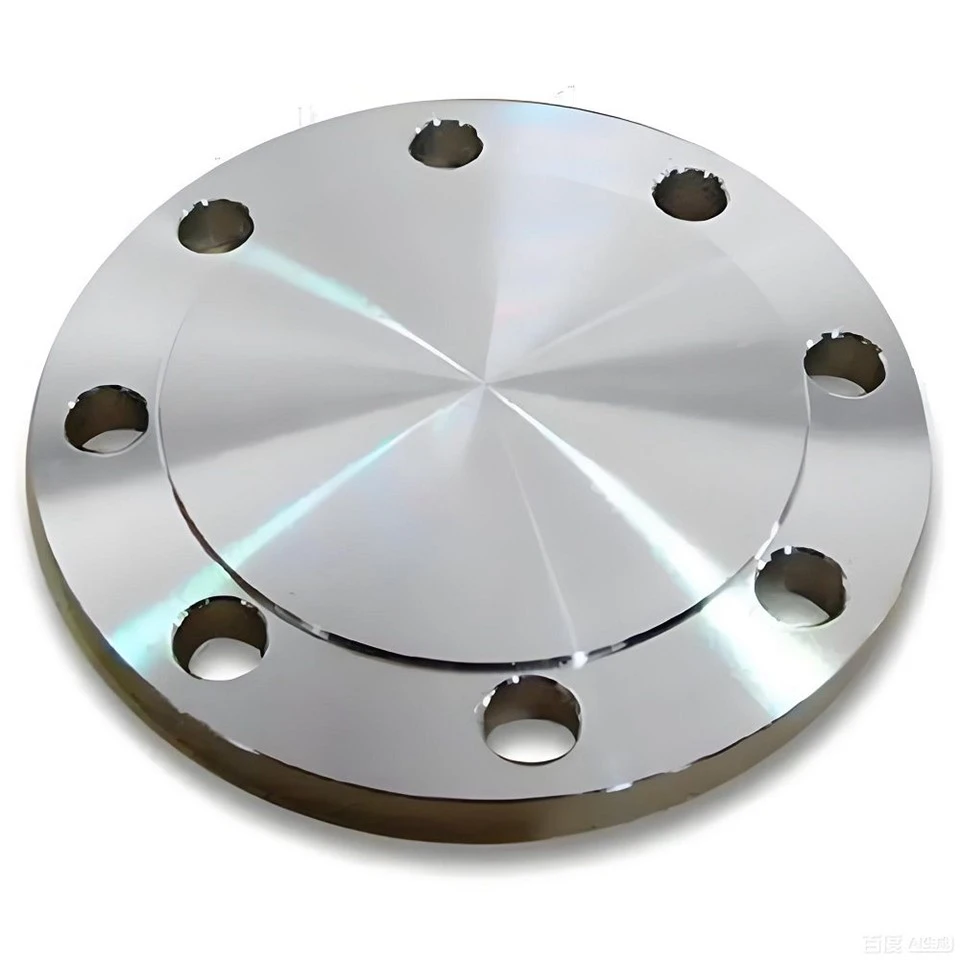
On the other hand, the Titanium Blind Flange is used to close the end of a pipe. It doesn't have a central hole for fluid to pass through. The manufacturing of blind flanges might be a bit more complex, especially if they need to meet high - precision requirements. This can increase the cost compared to plate - type flanges.
Then there's the Titanium Neck Flat Welding Flange. This type has a neck that provides additional strength and is often used in high - pressure and high - temperature applications. The extra material and the more complex manufacturing process involved in making the neck contribute to a higher cost.
Another big factor is the grade of titanium used. Titanium comes in different grades, each with its own properties. For example, Grade 2 titanium is more commonly used and is relatively less expensive. It has good corrosion resistance and is suitable for many general applications. But if you need a higher - strength or more corrosion - resistant grade, like Grade 5 (also known as Ti - 6Al - 4V), the cost will be significantly higher. Grade 5 titanium contains aluminum and vanadium, which give it enhanced mechanical properties, but the alloying elements make it more expensive to produce.
The size of the flange also matters a lot. Larger flanges require more raw material, and they may also be more difficult to machine. This means that as the size of the titanium flange increases, so does the cost. Smaller flanges, on the other hand, use less material and are generally easier to manufacture, so they're usually cheaper.
Quantity is another important consideration. If you're ordering a large quantity of titanium flanges, you can often get a better price per unit. This is because suppliers can benefit from economies of scale. They can buy raw materials in bulk, which reduces the cost per unit of material. Also, the setup costs for manufacturing can be spread out over a larger number of flanges. So, if you're planning to purchase a large number of flanges, it's definitely worth negotiating with the supplier for a better deal.
The manufacturing process also affects the cost. Some flanges are made through forging, which involves shaping the metal by applying pressure. Forged flanges are generally stronger and more reliable, but the forging process is more expensive than other methods like casting. Casting involves pouring molten metal into a mold, which is a less expensive way to produce flanges but may result in lower - quality products in some cases. Machining is another process used to make flanges, where the metal is cut and shaped using various tools. Machining can be very precise but can also be time - consuming and costly, especially for complex designs.
Market conditions also play a role in the cost of titanium flanges. The price of titanium raw materials can fluctuate based on factors like supply and demand, geopolitical issues, and economic conditions. If there's a high demand for titanium in other industries, like aerospace, the price of titanium may go up, and this will be reflected in the cost of titanium flanges.

Quality control is an important aspect that can impact the cost. High - quality titanium flanges need to go through strict quality control measures to ensure they meet industry standards. This includes testing for strength, corrosion resistance, and dimensional accuracy. Suppliers that invest in good quality control processes may charge more for their products, but you can be more confident in the reliability of the flanges.
Now, let's get to the numbers. It's hard to give an exact price range because of all the factors we've discussed. But generally, for a small - sized, standard - grade plate - type titanium flange, you might expect to pay anywhere from a few dollars to a couple of hundred dollars. For larger or more specialized flanges, like high - grade titanium neck flat welding flanges, the cost could be several hundred dollars or even more.
If you're in the market for titanium flanges, I'd love to have a chat with you. We can discuss your specific requirements, like the type of flange, the grade of titanium, the size, and the quantity. Based on that, I can give you a more accurate quote. Whether you're working on a small project or a large - scale industrial application, we can find the right titanium flanges for you at a competitive price.
In conclusion, the cost of titanium flanges is influenced by many factors, including the type of flange, the grade of titanium, the size, the quantity, the manufacturing process, market conditions, and quality control. By understanding these factors, you can make a more informed decision when purchasing titanium flanges. If you have any questions or want to start a discussion about your titanium flange needs, don't hesitate to reach out.
References:
- General knowledge of the titanium flange industry
- Industry reports on titanium prices and market trends