

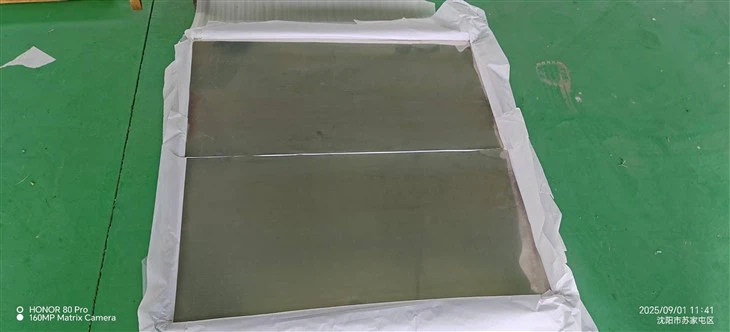
The specification
Cadmium material is a dense, soft, corrosion-resistant metal with historically valuable properties for plating, pigments, and batteries. However, its severe and cumulative toxicity has led to drastic reductions in its use across all industries. Today, its application is primarily limited to specialized, high-reliability sectors like aerospace (plating) and renewable energy (CdTe solar panels), where no equivalent substitute exists, and its use is managed under strict containment and recycling protocols.
Chemical Composition
Elemental Composition
Cadmium is a pure metal with atomic number 48.
Cadmium (Cd)
99.99% or higher purity for specific applications.
Alloyed Forms
Sometimes combined with zinc, copper, or other metals for particular uses (e.g., cadmium-zinc alloys).
Physical Properties
|
Physical Properties |
Data |
|
Density |
8.65 g/cm³ (grams per cubic centimeter). |
|
Melting Point |
321.07°C (610°F) |
|
Boiling Point |
765°C (1409°F) |
|
Color |
Silvery-white metal with a bluish tinge |
|
Hardness |
Soft, relatively ductile metal |
|
Electrical Conductivity |
3.2 x 10⁶ S/m (conductivity in terms of Siemens per meter). |
|
Thermal Conductivity |
96 W/m·K (Watt per meter Kelvin). |
Mechanical Properties
|
Mechanical Properties |
Data |
|
Tensile Strength |
35 - 100 MPa (varies depending on alloy form) |
|
Yield Strength |
Approximately 20 - 50 MPa. |
|
Elongation |
3% - 15% (depending on form and alloy). |
|
Young's Modulus |
Around 47 GPa (Gigapascals). |
Corrosion Resistance
Cadmium is highly corrosion-resistant, especially in alkaline and acidic environments.
Passivation: Forms a protective oxide layer when exposed to air, providing some protection against corrosion.
Electrical and Thermal Conductivity
Electrical Conductivity
Cadmium exhibits moderate electrical conductivity, typically used in specific battery and coating applications.
Thermal Conductivity
Moderate, but used in applications requiring specific heat dissipation properties (like electronics).
Alloy and Application-Specific Variations
● Cadmium Plating: Cadmium is commonly used in plating for its corrosion-resistant properties. Typically, cadmium plating thickness can range from 5 microns to 50 microns.
● Alloy Forms: Cadmium is used in alloys with metals such as zinc and copper for applications in the aerospace, electronics, and marine industries.
Toxicity and Safety
● Toxicity: Cadmium is highly toxic and carcinogenic, especially when inhaled as dust or fumes. Special care should be taken during handling, particularly in industrial or laboratory settings.
● Safety Standards: Cadmium and its compounds are regulated by several agencies, including OSHA, EPA, and the EU, due to their hazardous nature.
● Handling and Storage: Must be stored in well-ventilated areas, away from direct sunlight and incompatible materials.
Applications of Cadmium Material
● Batteries: Particularly in Ni-Cd (Nickel-Cadmium) rechargeable batteries, which are used in power tools, cameras, and medical equipment.
● Plating and Coatings: Used for corrosion resistance in automotive, military, aerospace, and electrical components.
● Solar Cells: Used in CdTe (Cadmium Telluride) thin-film solar cells.
● Pigments: Used in cadmium-based pigments for ceramics, plastics, and paints.
● Alloys: Cadmium is added to alloys, such as brass and solder, to improve their machinability.
Standards and Specifications
Purity
The purity of cadmium material can vary, but typically ranges from 99.9% to 99.99% depending on the use.
ASTM Standards
ASTM B766 (Cadmium and Cadmium Alloys) specifies the composition and quality for cadmium used in plating and coating.
ISO
ISO 7442 outlines cadmium and cadmium alloy products' quality specifications.
Environmental Concerns
● Waste Disposal: Cadmium and its compounds should be disposed of in accordance with local environmental regulations.
● Recycling: Cadmium can be recycled, particularly from used batteries and electronics.
Hot Tags: cadmium material, China cadmium material manufacturers, suppliers, factory, Cadmium Material, Niobium Material, other rare metal, Tantalum Material, Zirconium Material


